How often should you receive Reiki?
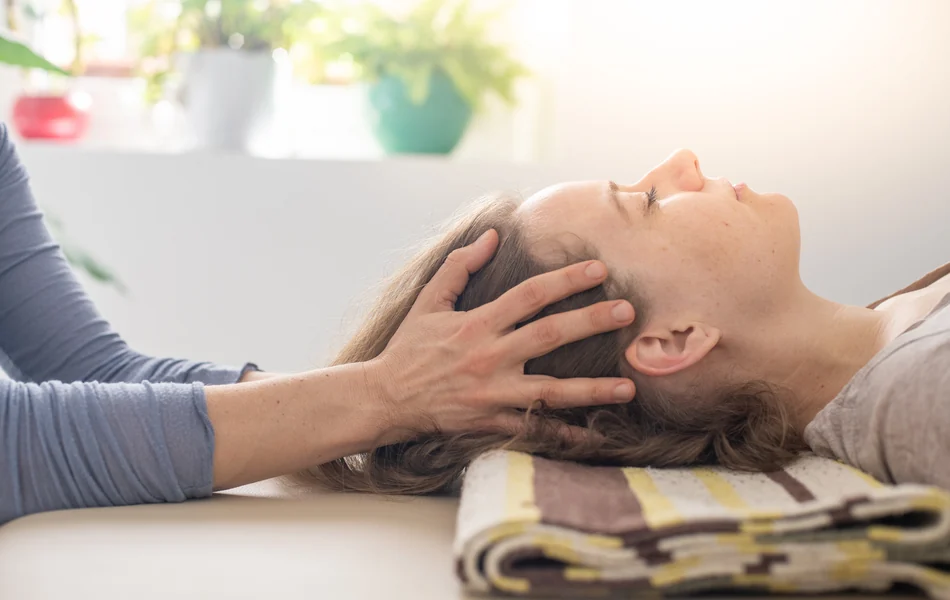
Some people receive a Reiki session at a particular moment and feel that it gave them what they needed. Others make it part of their routine, alongside caring for their diet and rest. And some are going through a difficult period and need sessions much closer together for support.
So when someone asks me how often they should have Reiki, my answer almost always begins with another question: what do you want support with? The ideal frequency is different for a stressful week than for grief, medical treatment or a profound period of change.
In this article I explain how to think about the frequency of Reiki according to your situation, what I notice in people who receive it regularly, and how to work out the rhythm you need.
The frequency depends on what you want support with
There are three main ways to receive Reiki, each with its own rhythm. Understanding them can help you identify what best fits your current situation.
A one-off session
This can be ideal when you are facing something specific: a highly stressful week, difficult news or a significant change. A single session may help you regain balance at that moment, and you do not need to commit to a longer process if that does not feel necessary.
Ongoing sessions
When what you need support with lasts longer, such as grief, a period of intense anxiety or a health problem, it can help to receive Reiki more regularly. If you are having medical treatment, for example, Reiki can offer valuable support alongside it. In these cases, sessions are often held one to three times a week.
Preventive care
Some people receive Reiki even when nothing particular is happening, as a way of caring for their energy before an imbalance appears. For this kind of care, less frequent sessions are often enough—for example, once a month or whenever you feel you need one.
What I notice in long-term Reiki processes
Besides one-off sessions, I support people who have received Reiki regularly for a long time, some once a week and others up to three times. This is one of the parts of my work I enjoy most, because it lets me see something a single session cannot show: how a process unfolds.
At each session I observe the person's energetic state. By working with them over time, I can notice differences from one session to the next. I see how their energy moves: centers that initially seemed very blocked gradually become more balanced, while those that continue to show imbalances point more clearly to aspects of life needing attention.
What people tell me matches what I observe in their energy. They say they sleep better, respond differently to situations that once overwhelmed them, and feel more stable. These changes do not happen overnight: they are built session by session, which is precisely why they can be so lasting.
Signs that you might need more frequent sessions
Sometimes your body and emotions signal that a single session is not enough. Here are some signs that more regular Reiki might suit you:
- The relief does not last long: you feel very good after a session, but a few days later you return to the same state.
- You are going through a long process: grief, a separation, medical treatment or a life change that will not be resolved in a week.
- Stress is constant: you work under intense pressure or live in an environment that wears you down every day.
- You have ongoing trouble sleeping: your rest does not recover and tiredness keeps building.
- You are in a period of transformation: emotions emerge, memories return and changes call for support.
How to tell what frequency you need
The best guide is to notice how you feel in the days after each session. How long does the feeling of calm last? When do you start to feel tension returning? Your answers can give you a clear clue about the rhythm your energy needs.
It also helps to listen to your intuition. Many people feel, almost without thinking about it, that it is time for another session. That impulse is often quite accurate and worth considering instead of waiting for a fixed date.
Can you receive too much Reiki?
This is a common question, and my answer is reassuring: Reiki does not cause an energetic overload. The energy acts in the way most suitable for the person receiving it, and each person takes only what they need. From an energetic perspective, receiving sessions close together is therefore not a risk.
In fact, continuity is an advantage in an ongoing process. Each session picks up the work where the previous one left off, allowing you to explore aspects that only begin to shift in a single session.
If you have been initiated into Reiki
If you have completed the first level of Reiki, you already have a valuable tool: self-treatment. In the Reiki tradition, it is recommended to practise it every day, even for a few minutes, to keep your energy balanced and support your own process.
Daily practice greatly reduces how often you may need Reiki from someone else. Even so, an external session can add something at times: when you are going through something deeper, when it is hard to maintain your practice or when you need another person to observe your energy from the outside.
How to find your own rhythm
If you have never received Reiki, the simplest thing is to start with one session. Based on what I observe in that first session and how you feel in the following days, we can work out together what frequency makes sense for what you are going through and adjust it as the process unfolds.
You can learn more about my distance Reiki sessions, where I explain how I work, what happens during the session and what is included in the report you receive afterwards.
Related articles
Leave a Reply